

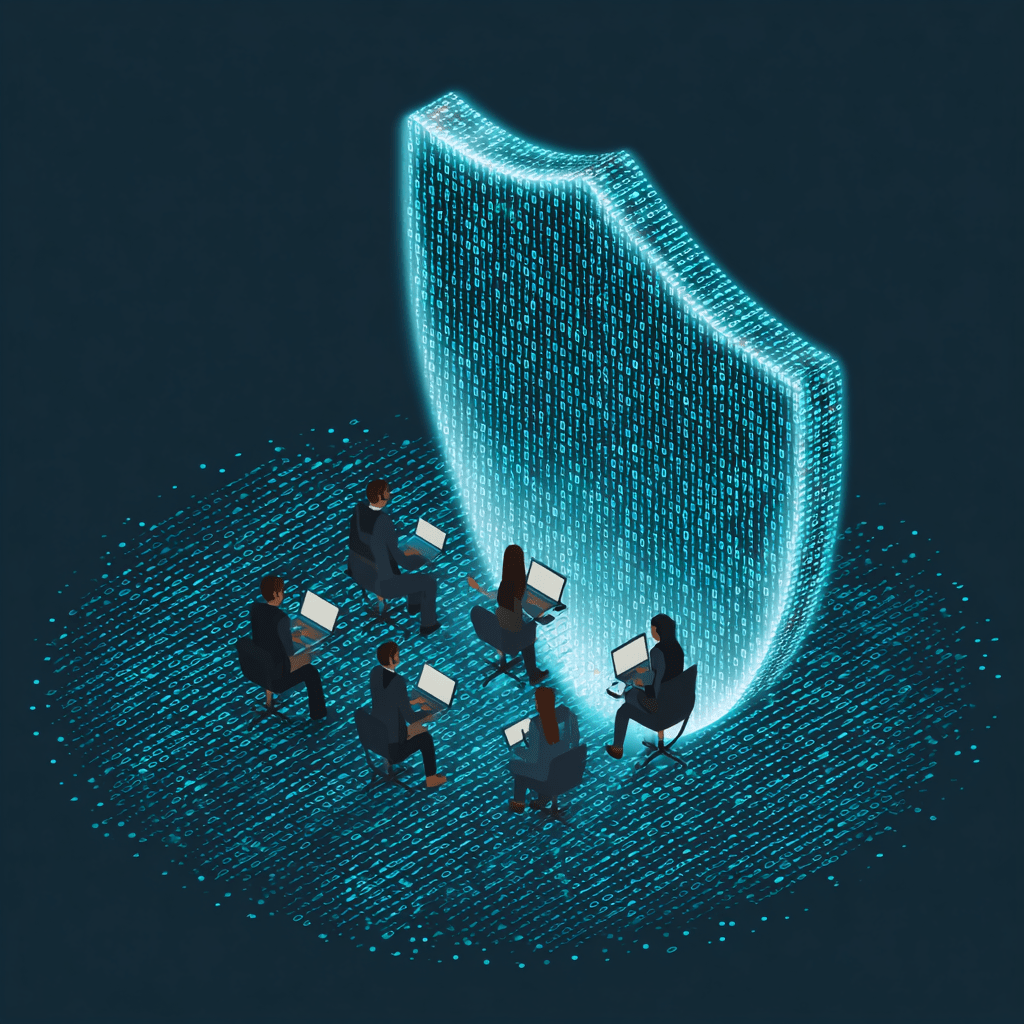
Software security for SMEs is one of the most important challenges for any company that wants to digitize today. Small and medium-sized companies often think that, because they do not manage large volumes of data, they are not a priority target for cyberattacks. But the reality is quite different: precisely because they have fewer resources allocated to security, they become easy victims.
In this article I explain what the risks of generic software are, why custom software is safer, and what regulations and best practices should be taken into account.
Main risks in generic software
Many SMEs start using standard programs thinking that this will cover their basic needs. However, these systems have frequent vulnerabilities:
Massive attacks: Hackers know the weaknesses of widely used platforms and take advantage of them.
Reliance on third parties: The company has no control over where or how the data is stored.
Delays in updates: Vendors can take days or weeks to fix critical gaps.
Limited regulatory compliance: They do not always contemplate the GDPR or other specific regulations.
This scenario causes many companies to take risks without realizing it, with serious economic and reputational consequences.
Advantages of custom software in security
Tailor-made software is an alternative that allows SMEs to strengthen security from day one. Some of its strengths are:
Absolute control: the company decides how and where the data is stored.
Advanced security protocols: multi-factor authentication, data encryption, and custom permissions.
Immediate updates: custom development allows vulnerabilities to be resolved quickly.
Adaptation to the business: the functionalities are created thinking about the specific needs of each SME.
Less exposure: It’s not a massive system, so it’s less attractive to attackers.
This combination makes custom software a strategic investment to protect sensitive information and gain trust.
Applicable regulations (GDPR, ISO)
When we talk about software security for SMEs, we cannot forget the legal part. There are key regulations that must be complied with:
GDPR (General Data Protection Regulation): applicable to any company that handles customer or user data in Europe.
ISO 27001: International standard for information security management.
Digital Services and Electronic Privacy Act: regulations that affect the way data and communications are processed.
Tailor-made software can incorporate specific functionalities to ensure compliance with these regulations, reducing legal risks and penalties.

Practical recommendations for SMEs
From my experience, the best practices for strengthening security and privacy are:
Carry out periodic audits of processes and systems.
Implement data encryption both in transit and at rest.
Define clear access policies and establish different levels of permissions.
Train teams in good digital practices (phishing, strong passwords, etc.).
Work with a trusted provider that offers tailor-made software aimed at security.
Connection with other key areas
Tailor-made software for SMEs not only solves current problems, but also impacts other strategic aspects:
Automation of business processes with tailor-made software → reduces time and errors.
How custom software improves the productivity of teams → provides practical tools adapted to each flow.
Advantages of custom software vs. standard solutions for SMEs → to see why customization is key.
Also, if you want to understand the full picture, you can read the central article:
How custom software is revolutionizing SMEs
Conclusion
Software security for SMEs is not a luxury, but a necessity to survive and compete in a digitized market. Small and medium-sized companies have a lot to gain if they opt for customized solutions that guarantee control, regulatory compliance and protection against possible attacks.
If you want to strengthen the security of your company and ensure that you comply with all regulations, at wwwarcelona we develop tailor-made software focused on privacy and data protection.
